
Using the HHHHHMM Quality of Life Scale in Veterinary Practice

The HHHHHMM scale is one of the most widely used quality of life tools in veterinary medicine, and many of your clients will have found it online before they ask you about it. Its value in practice comes less from any single total and more from how it’s introduced, how often it’s repeated and how the results are read over time.
This guide is for veterinarians, technicians and practice teams. For a client-friendly explanation you can share with families, see our pet quality of life scale guide.
A Quick Refresher
Created by veterinary oncologist Dr. Alice Villalobos, the scale scores seven areas from 0 to 10, with 10 being best:
- Hurt: is pain well controlled, and is breathing comfortable?
- Hunger: is the pet eating enough, or is hand-feeding or a feeding tube needed?
- Hydration: is the pet drinking enough, or are subcutaneous fluids needed?
- Hygiene: can the pet stay clean, especially after eliminating, and are there pressure sores?
- Happiness: does the pet still respond to family, toys and surroundings?
- Mobility: can the pet get up and move around without help?
- More good days than bad: when bad days start to outnumber good ones, quality of life may be compromised.
A total above 35 out of 70 is generally considered an acceptable quality of life for a hospice or palliative care patient.
Like most quality of life scales in everyday use, HHHHHMM is best treated as a structured guide rather than a validated measurement tool. A 2015 review found 52 published quality of life instruments for dogs, and only 11 had evidence of validation. That’s not a reason to avoid the scale. It’s a reason to use it as a framework for observation and conversation alongside your clinical exam, rather than as a cutoff.
When to Introduce It
- When a palliative or hospice plan begins. The 2016 AAHA/IAAHPC End-of-Life Care Guidelines start every end-of-life treatment plan with a thorough assessment of the patient’s medical, social and emotional needs. A first score gives you and the family a shared starting point.
- Not necessarily on the day of the diagnosis. The same guidelines note that the best time to discuss a terminal or progressive disease isn’t always the moment the client hears the news. Introducing the scale at a follow-up visit or call, once the family has had time to absorb it, often goes better.
- At senior wellness visits. A baseline taken while a pet is doing well makes later changes much easier to see.
- When a family asks “How will we know?” The scale gives them something concrete to watch for, and a way to share what they’re seeing with you.
How to Introduce It to Families
- Frame it around comfort. Present the scale as a way to notice what’s going well and what needs support, not as a countdown.
- Explain why their observations matter. Pets often behave differently in the clinic. Families see how the pet eats, sleeps and moves at home, and that’s what the scale captures.
- Ask each caregiver to score separately. Different family members often notice different things, and a difference in scores is useful information, not a problem to resolve.
- Keep it consistent. Scoring at a similar time of day, and noting anything unusual like a new medication or a vet visit, makes scores easier to compare.
- Invite short videos. The AAHA/IAAHPC guidelines include video of the patient’s behavior at home in periodic plan assessments. A short clip of a pet getting up or walking can say a lot.
How Often to Reassess
The AAHA/IAAHPC guidelines recommend that every end-of-life treatment plan include a schedule for follow-up communication and reassessment. A reasonable starting point:
- Baseline: once, when the plan starts or at a senior visit
- Stable or slowly changing: monthly or quarterly
- Declining or actively managed: weekly, or every few days
- After any change: a new medication, a dose adjustment, a procedure, or a sudden change at home
Agree on the schedule with the family and write it into the plan, so it doesn’t depend on anyone remembering.
Reading Trends, Not Just Totals
A single score is a snapshot, and pets have off days just like people. The real value comes from comparing scores over time.
- Watch individual categories. A total above 35 can hide one area that’s clearly struggling. A pet scoring well everywhere except Hurt still needs attention to pain control.
- Look for sustained drops. A Mobility score that slides from 7 to 3 over a month says more than any single bad day.
- Let falling categories guide the plan. A drop in Hunger or Hydration points toward appetite support, nausea control or fluids. A drop in Hygiene might mean bedding changes, sanitary clips or help after eliminating.
- Check that changes are working. If you adjust pain medication, the next few scores should show whether it’s helping.
- Notice differences between caregivers. When two family members score very differently, it’s often worth a gentle conversation about what each of them is seeing.
Remember the Caregiver
HHHHHMM focuses on the pet, but the family’s capacity matters too. The AAHA/IAAHPC guidelines ask practitioners to discuss the client’s ability and willingness to provide the extra care a terminal patient needs. Research supports this: a 2017 study of 238 dog and cat owners found that those caring for a pet with a chronic or terminal illness reported more stress, more symptoms of depression and anxiety, and poorer quality of life than owners of healthy pets.
Asking how the household is coping, alongside the scale, gives families permission to say when caregiving is getting hard, and gives you a chance to adjust the plan or point them toward support.
Recording Results
- Record the score for each category, not just the total, with the date and who completed it.
- Note the family’s goals for their pet. The AAHA/IAAHPC guidelines recommend recording the treatment goals a client describes, as specifically as possible, in the medical record.
- Attach completed forms or PDFs, and any videos the family shares.
- Note what you changed in response, so the next score can be read in context.
Using Scores in End-of-Life Conversations
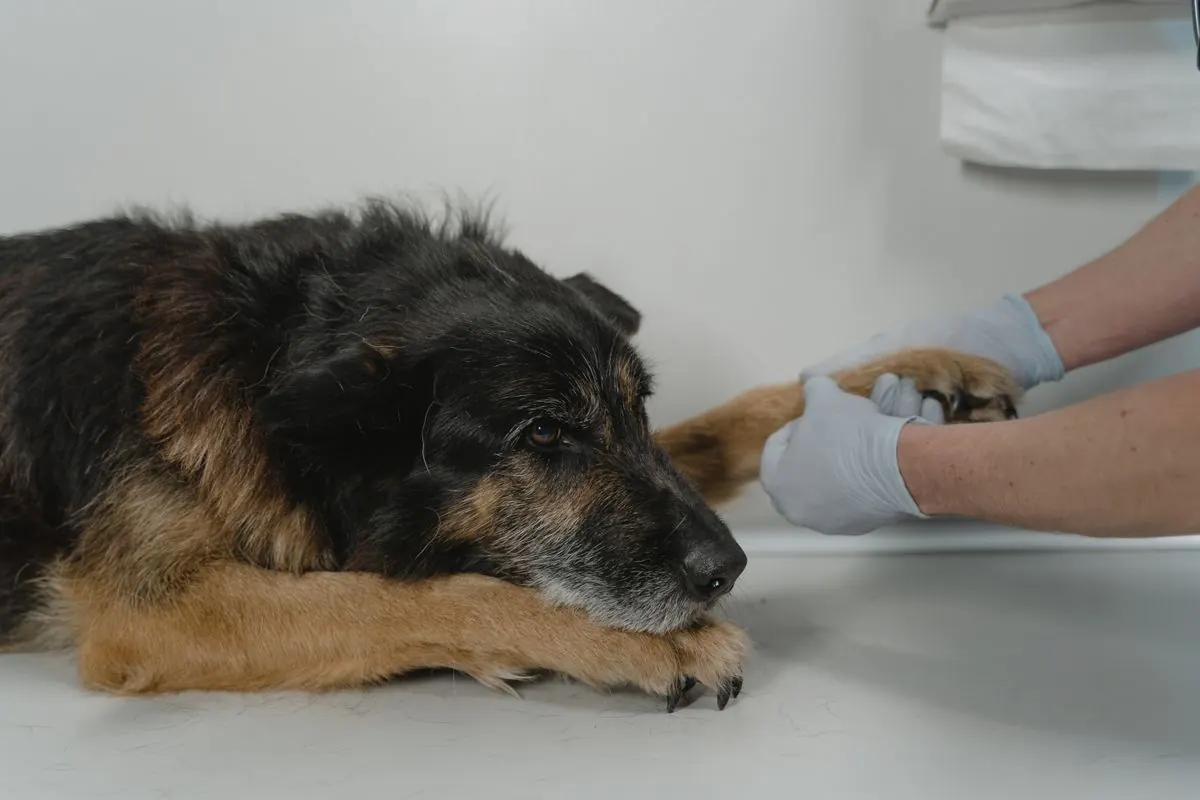
Scores can make difficult conversations a little easier by giving everyone a shared language. Instead of “I think she’s getting worse,” a family can say “her Mobility score has dropped every week this month.” That moves the conversation from feelings that are hard to put into words toward what the pet needs now.
A number should never make the decision. The AAHA/IAAHPC guidelines emphasize that clients should be invited to ask questions, shouldn’t feel rushed or pressured, and should never feel judged, whatever they decide. The scale is there to support that conversation, not to replace it.
Making It Easier Between Visits
The hardest part of using any scale is getting families to complete it regularly and getting the results back to you. Hospet’s quality of life assessment covers the same ground as HHHHHMM, plus elimination and how the household is coping:
| HHHHHMM area | Hospet assessment category |
|---|---|
| Hurt | Discomfort |
| Hunger and Hydration | Nourishment |
| Hygiene | Hygiene |
| Happiness | Behavior |
| Mobility | Movement |
| More good days than bad | Discomfort (“more bad days than good days”) |
| — | Elimination |
| — | Household (how caregiving is affecting the family) |
Instead of scoring each area from 0 to 10, families respond to plain statements about their pet, such as “Piper is panting (even when resting),” from “Strongly Agree” to “Strongly Disagree.” Each category gets a percentage score, and every assessment is charted so you can see trends at a glance.


With a free Hospet Connect account, you can email any client a one-time assessment that they complete in their browser, without an app or account. You get each category’s score and a PDF for the record. If the family saves it to a free Hospet account, you can follow their assessments, daily ratings and weights between visits from your Client List.
Learn how Hospet works for veterinary teams, or create your free provider account.
Sources
- Alice Villalobos, DVM, “Quality of Life Scale,” Veterinary Practice News
- Bishop G, Cooney K, Cox S, et al. “2016 AAHA/IAAHPC End-of-Life Care Guidelines.” Journal of the American Animal Hospital Association, 2016
- Belshaw Z, Asher L, Harvey ND, Dean RS. “Quality of life assessment in domestic dogs: An evidence-based rapid review.” The Veterinary Journal, 2015
- Spitznagel MB, Jacobson DM, Cox MD, Carlson MD. “Caregiver burden in owners of a sick companion animal: a cross-sectional observational study.” Veterinary Record, 2017
Support your clients between visits with Hospet Connect
Hospet Connect is free for veterinary teams. Send your first quality of life assessment today.
Create Your Free Provider Account